Monuments, Skyscrapers & viewpoints, Meeting places
+52 (55) 5592 2038
Plaza de la República s/n, Col. Tabacalera. 06030, Alameda
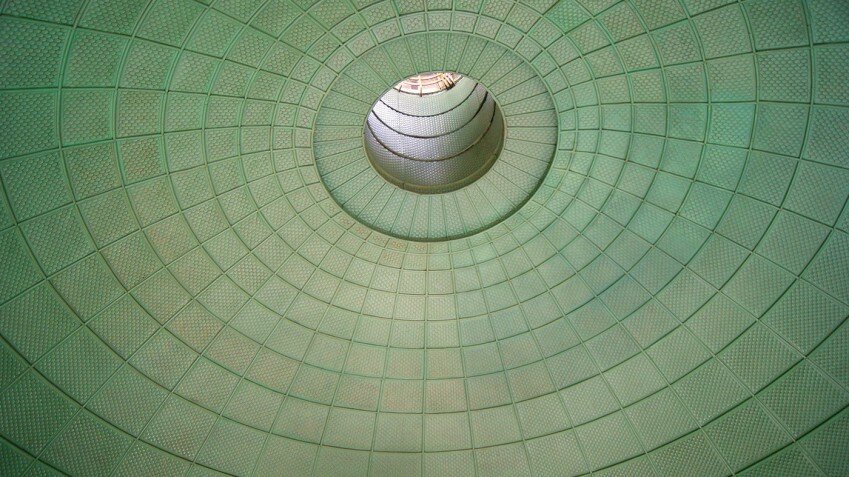
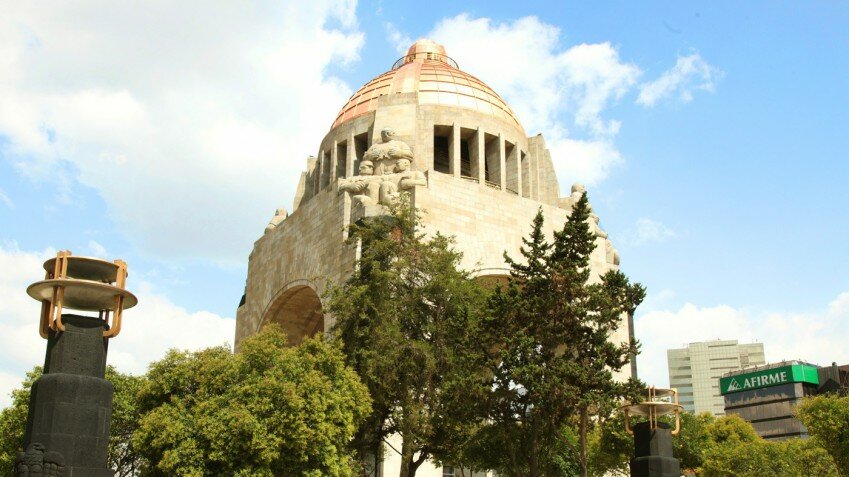
The Monument to the Mexican Revolution (Monumento a la Revolución) is an unfinished architectural work, meant to be the Palace of the Chamber of Deputies and Senators. Only the dome remains from the original project.
It was an venue promoted by Porfirio Diaz. Work was comissioned to architect Émile Bénard but work was suspended after the outbreak of the Mexican Revolution for lack of resources. It was restarted by architect Carlos Obregon after the revolt, to become a monument to the Revolution. Construction work lasted from 1933-1938 and is inspired by the art déco style.
It has sculptures alluding to Independence, the Reform Laws, the Agrarian Law and the Workers Laws. It reopened on the centenary of the feat in 2010. Herein lie the funeral remains of Francisco I. Madero, Plutarco Elias Calles, Lázaro Cárdenas and Francisco Villa.
Check our calendar of events.
How it ended up a monument. Porfirio Díaz laid the first stone in 1910 for a palace for the Federal Legislature, a project on the drawing board since 1897. Francisco Madero kept it funded until 1913; after his murder and the bloodiest phase of the revolution, the works were abandoned with only the steel-framed dome standing. In 1933 the architect Carlos Obregón Santacilia proposed reusing that skeleton as a monument to the revolution's heroes, cladding the neoclassical dome in Art Deco and Mexican social realism — which is why the building reads as two eras at once.
The sculptures and the mausoleum. Four stone groups by Oliverio Martínez, assisted by the Costa Rican sculptor Francisco Zúñiga from 1936, sit at the corners and stand for Independence, the Reform Laws, the Agrarian Laws and the Labour Laws. The piers also serve as a mausoleum: Francisco I. Madero, Venustiano Carranza, Plutarco Elías Calles, Lázaro Cárdenas and Francisco "Pancho" Villa are buried here — political rivals in life, now a few metres apart.
What to do on site. The National Museum of the Revolution sits underground beneath the plaza, and a glass lift runs up through the structure to a viewing level over the roofs of the Tabacalera and towards Reforma. The lift and the viewpoint keep their own hours, separate from the plaza, so check before you go. The esplanade itself stays busy until late, with a long water feature that doubles as a skate spot, and it hosts concerts and civic events.
Getting there. It stands on Plaza de la República, colonia Tabacalera. Revolución station on metro Line 2 comes out at the plaza, and Hidalgo and Juárez are a short walk away. The best light is at dusk, when the monument is lit and the plaza fills up.
 Facebook
 Twitter
 Instagram