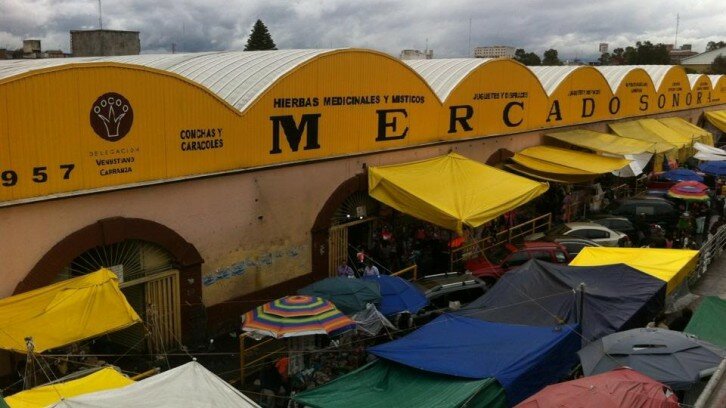
What this section covers. Eating the way the city eats — which happens on the street, in markets and in fondas far more than in restaurants.
The street. Tacos are the centre of it: al pastor carved off a vertical spit, a technique Lebanese migrants brought in the early twentieth century and Mexico adapted with pork, pineapple and coriander. The rule is simple: eat where there is a queue and where the turnover is fast. Taste the salsa with the tip of the taco before pouring, because the heat is never announced.
The markets. Almost every market has a row of fondas serving comida corrida — soup, a main course and agua fresca for roughly the price of a coffee in the Condesa. It is the cheapest way to eat well in the city and the one most visitors never try. San Juan is where the chefs buy; La Merced is one of the largest markets in the Americas.
What to drink. Pulque, fermented maguey sap, drunk here long before the Spanish arrived; agua fresca of the day — jamaica, horchata, tamarind — which usually costs less than a soft drink; and mezcal, which is sipped, not shot.
Practical notes. Carry cash and small change; almost none of this takes cards. The Mexican lunch hour is 14:00 and many kitchens open late. Bottled water everywhere.
 Facebook
 Twitter
 Instagram