

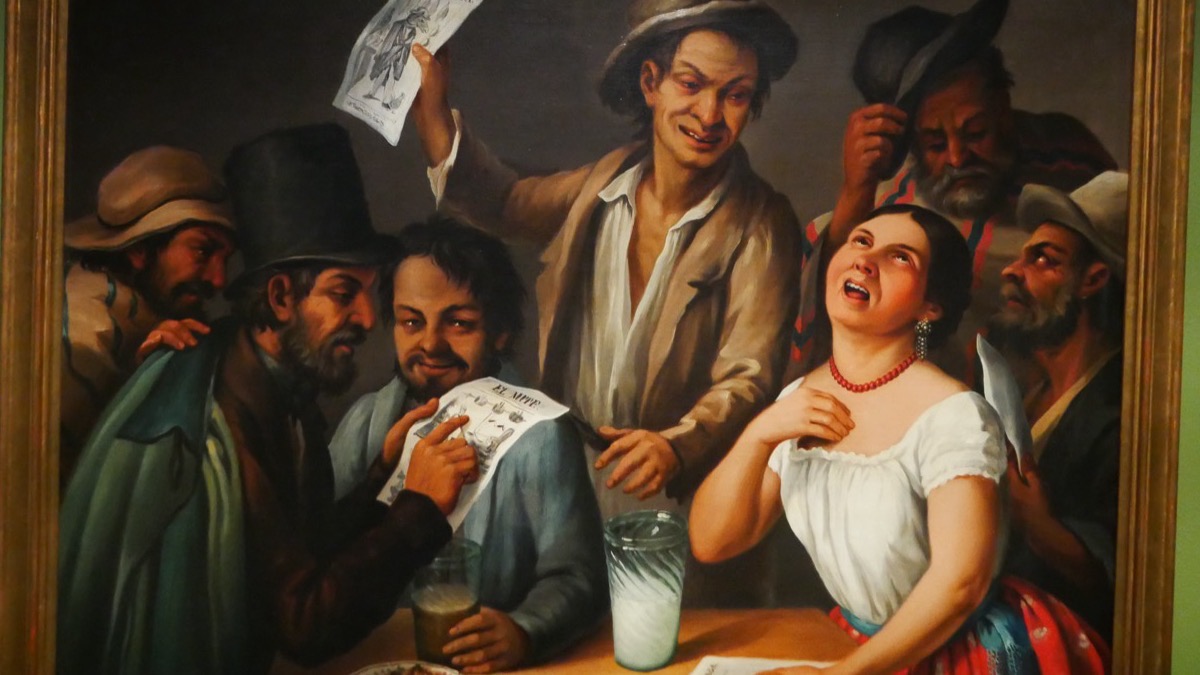
Illustrative image: pulquería scene by José Agustín Arrieta (1851) · Photo: Luisalvaz — CC BY-SA 4.0 via Wikimedia Commons
Science and history
What the museum covers. Pulque is a drink fermented from maguey sap with a pre-Hispanic history: it was ritualised, its consumption was regulated, and it was associated with the goddess Mayahuel. The museum gathers the whole craft —the tlachiquero who scrapes the plant, the acocote gourd used to draw the sap, the tinacal where it ferments— and the culture that grew around it: the pulquerías, with their absurd names, their painted murals and their unwritten rules.
Why the subject matters. Pulque went from a central drink to a stigmatised one with the arrival of industrial beer in the early 20th century, and over the last two decades pulquerías have reopened in Roma, the Centro and Coyoacán. The museum explains that arc, which is also a story about class and the city.
What to expect. A small, single-subject museum you can see in an hour, with objects, photographs and pulquería signage. The best way to use it is to follow with a visit to a traditional pulquería: the curados —oat, guava, pine nut— are the way in for anyone trying it for the first time.
Before you go. Small museums here keep limited and changeable hours: confirm the day and time before travelling, and ask whether a guided tour is running, as the subject gains a great deal from being explained.
 Facebook
 Twitter
 Instagram